top of page
LENORA LI

Collaborative Work Spring 2026


Boolean Strategy
Frustums were selected as the primary Boolean volumes because their single-curved surfaces are readily constructed within a steel stud system. By varying their size and proportion, these simple geometries generate diverse spatial conditions while remaining practical for modular fabrication. Boolean operations carve out face-to-face seating for conversation, sloped surfaces for reclining and climbing, skylights that introduce natural daylight, and small openings that encourage interaction between occupants and passersby. Around the studio, the frustums quickly earned an unofficial nickname: "cones without heads."


Construction Workflow
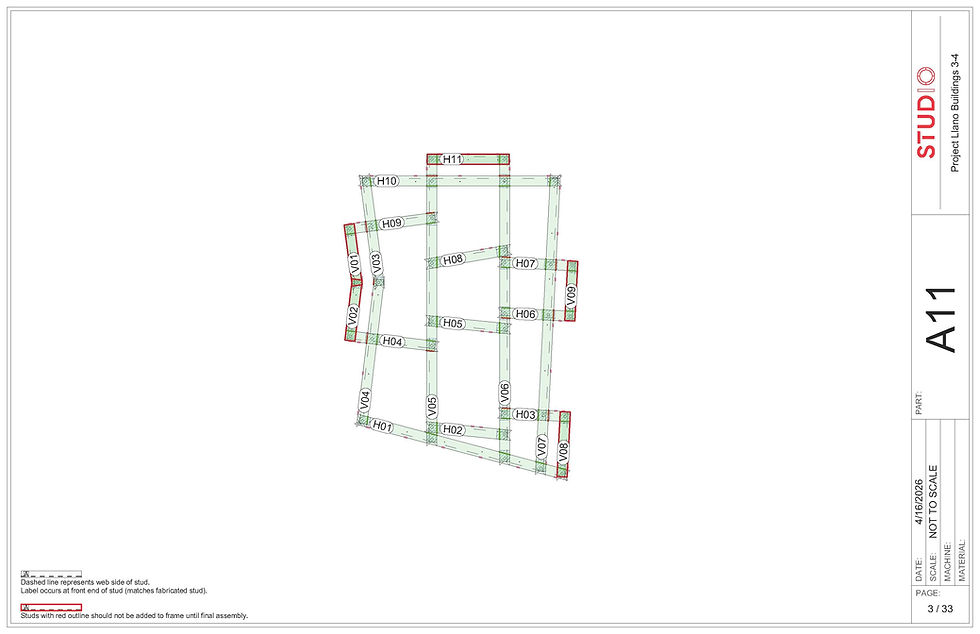
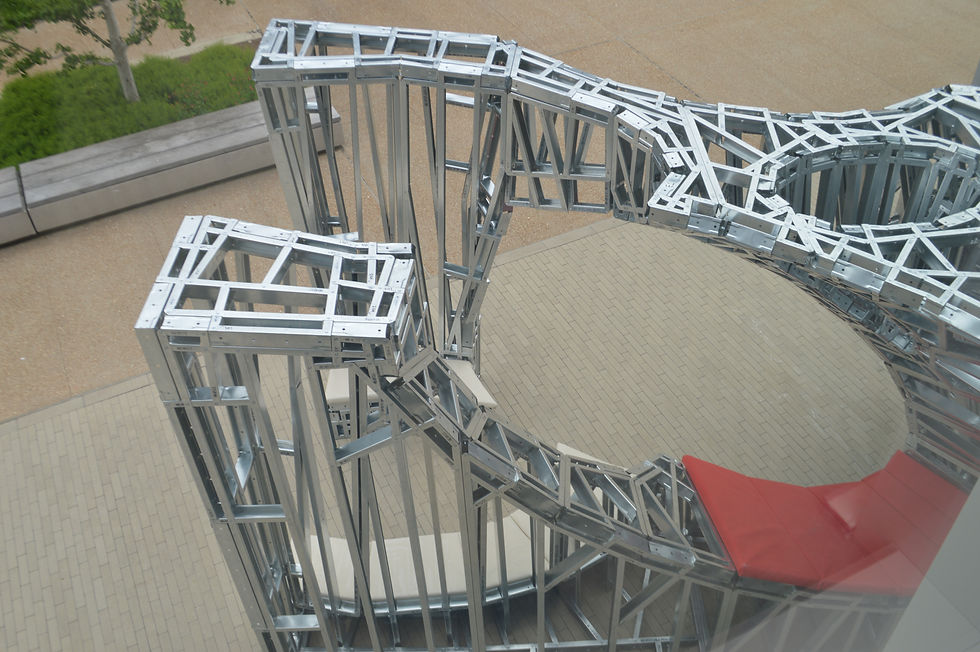
The project was realized through a phased assembly process. Steel studs were prefabricated off-site, assembled into frames, and later combined into larger modules. Each module was installed and connected on-site, allowing the structure to be built efficiently while maintaining dimensional accuracy.


Behind the Scenes
Designing the structure was only half the challenge—assembling it was another story. The upper modules were heavy enough to require three strong teammates to lift them into place, while some bolts could only be tightened by crawling inside the structure like human mechanics. From our second-floor studio, we had a front-row view of the entire operation as the project slowly came together. Thankfully, everyone survived, and so did the structure.




Case Study – MIT Sean Collier Memorial
This case study examines the Sean Collier Memorial for its Boolean-based form generation and modular assembly strategy. Its design methodology informed the geometric development and fabrication approach of this project.


Intelligent Prefabrication
Collaboration with
Josiah Gooden and Seanna Howard
Instructors: Scott Mitchell and Adam Barnstorff
A full-scale prefabricated installation exploring intelligent digital fabrication and mass-customized steel framing systems.
Developed through computational design, robotic fabrication, and modular assembly workflows, the project investigated how custom parametric systems can be deployed at architectural scale through rapid prefabrication and on-site assembly.
The final installation was fabricated in collaboration with Wies Offsite and assembled as eleven prefabricated modules for exhibition at AEC TechCon 2026 in St. Charles, Missouri
bottom of page