top of page
LENORA LI
Studies & Explorations
A collection of investigations across engineering and architecture.
This collection spans both my engineering and architectural education, reflecting an interdisciplinary approach to research, observation, and design.
A Neighborhood as a Living Fabric
Individual Work Spring 2025
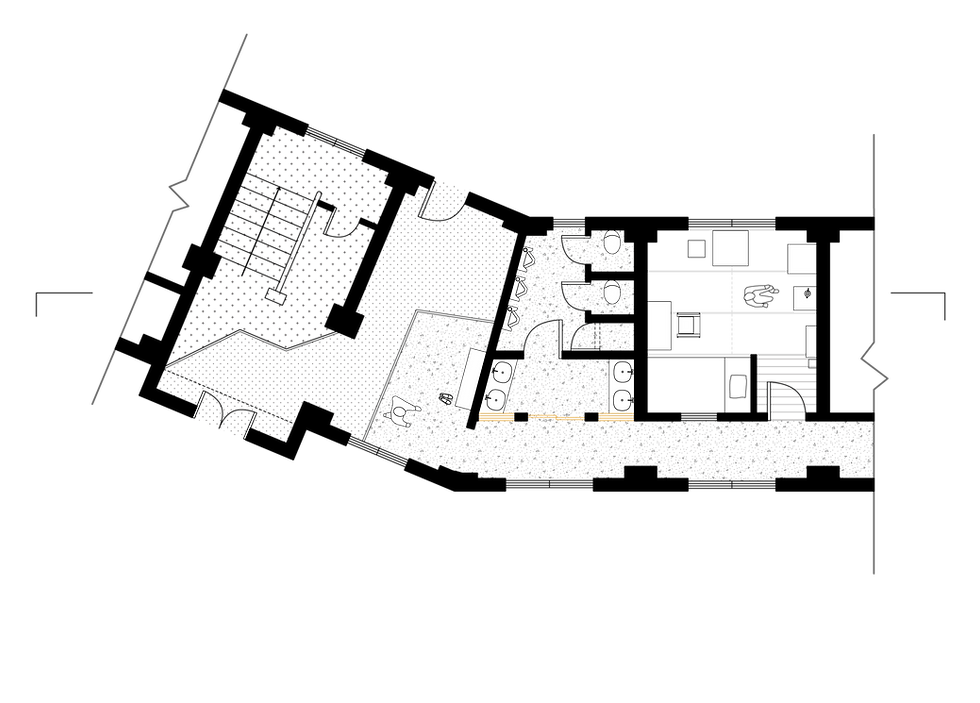
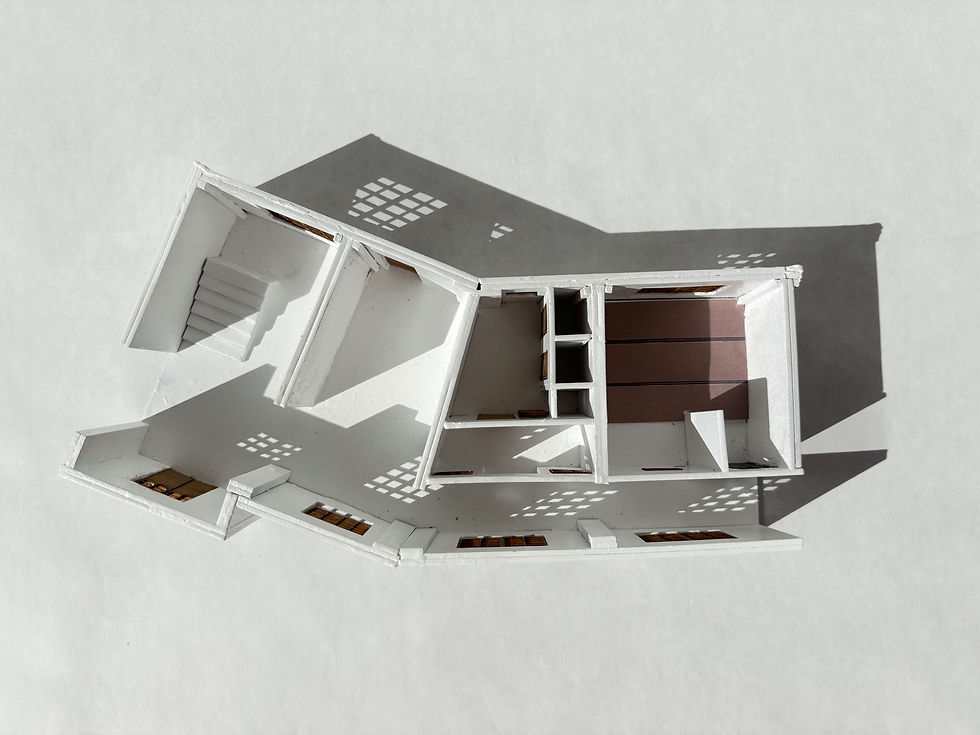
This research examines the Sant Antoni neighborhood and Biblioteca Sant Antoni–Joan Oliver in Barcelona through the relationship between urban fabric, architecture, and everyday community life. Through an analysis of plot divisions, figure-ground relationships, street layouts, public spaces, greenery, and ground-floor activities, the study explores how the neighborhood’s dense urban structure supports social interaction and diverse patterns of daily life. It also investigates how markets, storefronts, public spaces, and the library contribute to a connected and active urban environment. The project demonstrates how architecture is shaped by the existing social and spatial patterns of the city.


Photographic observations of surrounding markets and street activity
Figure-Ground Analysis


Biblioteca Sant Antoni–Joan Oliver
Photograph by Lenora Li, 2025
Ground Floor Plan
Physical Massing Model
A Community Before Its Time
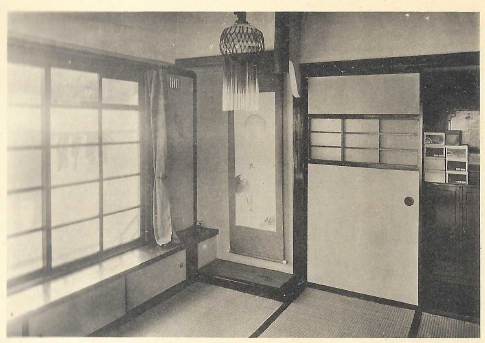
This research examines the Dojunkai Shibuya Apartments as a pioneering model of post-disaster housing that integrates structural resilience with community-centered design. Through analyses of site planning, residential layouts, and construction strategies, the study explores how shared courtyards, communal facilities, and flexible living spaces fostered social interaction while maintaining individual privacy. It also investigates how reinforced concrete construction, fire-resistant technologies, and traditional Japanese spatial principles—including tatami rooms and sliding partitions—were combined to create housing that was both culturally responsive and earthquake resilient. The project demonstrates how architecture can balance technical innovation, cultural continuity, and everyday community life, offering lasting lessons for contemporary housing design.
Individual Work Fall 2024


Source: Takanashi, Yoshitarō, ed. Shinkō Apātomento [New Apartments]. Kenchiku Shashin Ruijū.

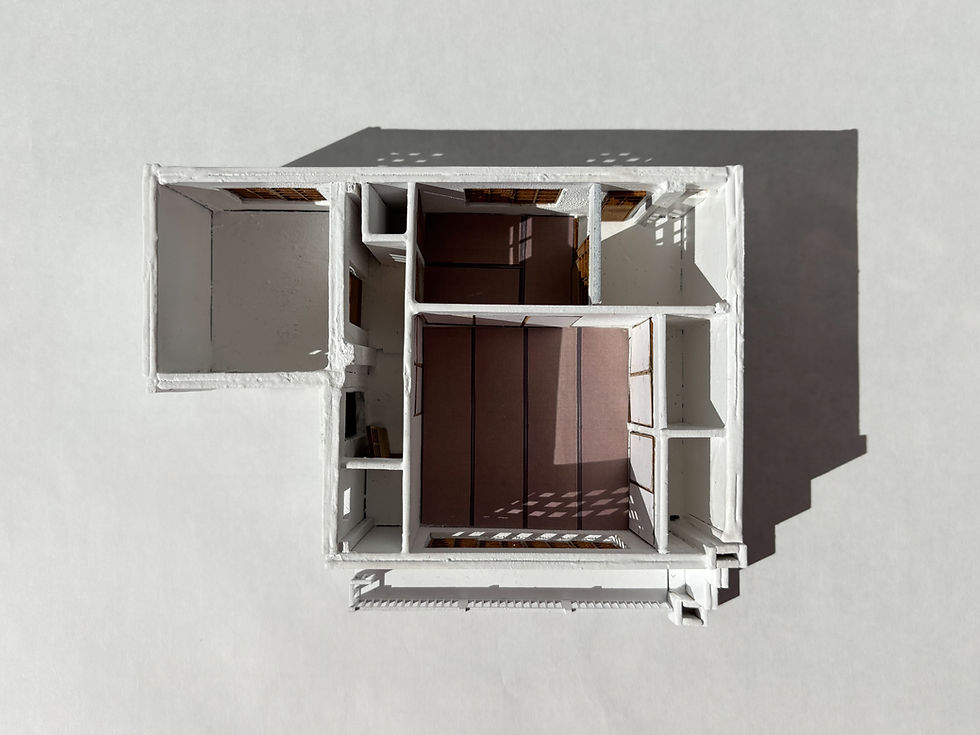

Physical Models by Lenora Li, 2024
A Sponge That Repels Water
Shortlisted for Outstanding Undergraduate Thesis
Individual Work Spring 2021
Oil spills and oily wastewater pose significant environmental challenges, creating a need for efficient, reusable, and low-cost materials for oil–water separation. This undergraduate engineering research developed a superhydrophobic and superoleophilic sponge capable of selectively absorbing oil while repelling water. Through chemical modification of a melamine sponge, the material achieved high oil absorption (68–106× its own weight), efficient oil–water separation, and excellent durability after repeated use. The project demonstrates the potential of functional materials for applications such as oil spill cleanup, industrial wastewater treatment, and environmental remediation.

Wettability of different sponge surfaces: (a, d) untreated sponge; (b, e) modified sponge with an amine-to-phenol molar ratio of 0; (c, f) modified sponge with a molar ratio of 0.5:1. Water droplets were stained blue with methylene blue, and oil droplets were stained red with Sudan III.

SEM images of : a, d pure sponge; b, e modified sponge with amine-phenol molar ratio of 0; c, f modified sponge with amine-phenol molar ratio of 0.5
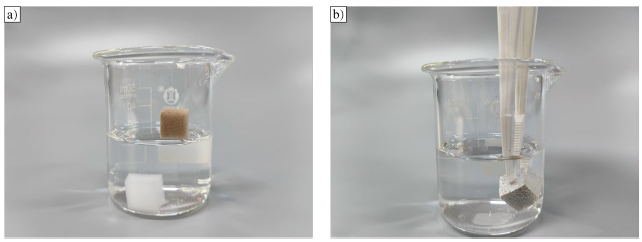
Performance of original sponge and modified sponge in water.

Photographs of static oil water separation process.Oil absorption from water surfaces and underwater. (a–c) Absorption of n-dodecane (red, density lower than water) floating on the water surface; (d–f) absorption of dichloromethane (red, density higher than water) submerged below the water surface. The modified sponge rapidly absorbs both surface-floating and submerged oil without visible water loss or residual oil.

A video of dynamic oil water separation process. Red liquid represents n-dodecane. The sponge was placed at the oil–water interface and connected to the pump as a filter. After pumping, the oil was rapidly transferred to the receiving beaker, while the water remained clear with no noticeable loss, demonstrating the sponge’s effective dynamic oil–water separation capability.

A Green Roof Module Powered by Biochar
6th National College Students’ Water Conservancy Innovation Design Competition — Second Prize
This project introduces a modular green roof system built around a multi-layer biochar substrate that integrates planting, water management, and filtration into a single lightweight unit. Each prefabricated module can be easily installed, replaced, or expanded, allowing flexible adaptation to different roof conditions. The layered biochar medium improves water retention, supports healthy plant growth, and naturally filters rainwater while reducing irrigation demand. An integrated drainage and water storage layer captures and redistributes rainwater, creating a self-sustaining system that minimizes maintenance. Compared with conventional green roofs, the modular design simplifies construction and long-term upkeep while improving resource efficiency. By combining renewable biochar with a scalable modular system, the project offers a practical solution for creating resilient, low-maintenance urban green roofs that enhance stormwater management, increase rooftop biodiversity, and improve the environmental performance of buildings.
(Collaborators: Jingfei Huang, Wei Du)
a-Biochar, kaolin, and fertilizer for plant growth and water retention.
c-Fiber-based biochar mesh that supports microbial growth and further purifies rainwater.
b-Honeycomb water hyacinth biochar for pollutant adsorption.
d-Biochar aggregate pellets (8–10 mm) for long-term water purification.
Collaborative Work Summer 2019
a
b
c
d

Photograph by Lenora Li, 2019

Top View Rendering — Modular Box
A Window Beyond Reality
This project explores the boundary between reality and imagination through the design of a conceptual window display. Familiar objects are deconstructed, rearranged, and placed in unexpected relationships to create a playful yet ambiguous composition. Partial figures, geometric accessories, and contrasting natural elements encourage viewers to complete the unseen narrative in their own minds. By revealing only fragments of the scene, the display transforms passive observation into an active process of curiosity, interpretation, and visual exploration.
Individual Work Summer 2020


Digital Rendering


A City Built Together
Collaborative Work Fall 2025

Vertopia is a collaborative strategy board game that explores how cities emerge through shared decisions rather than individual control. Players collectively construct a multi-layered vertical metropolis by stacking architectural elements, managing resources, and responding to changing events. While each player pursues personal objectives, every action reshapes the same urban system, balancing collaboration with competition. Through modular building mechanics, evolving city blocks, and an influence-based progression system, the game transforms urban planning into an interactive experience that encourages strategic thinking, negotiation, and collective imagination. (Collaborators: Dongyue Li, John Chen)


Photographs by Dongyue Li, 2026
bottom of page